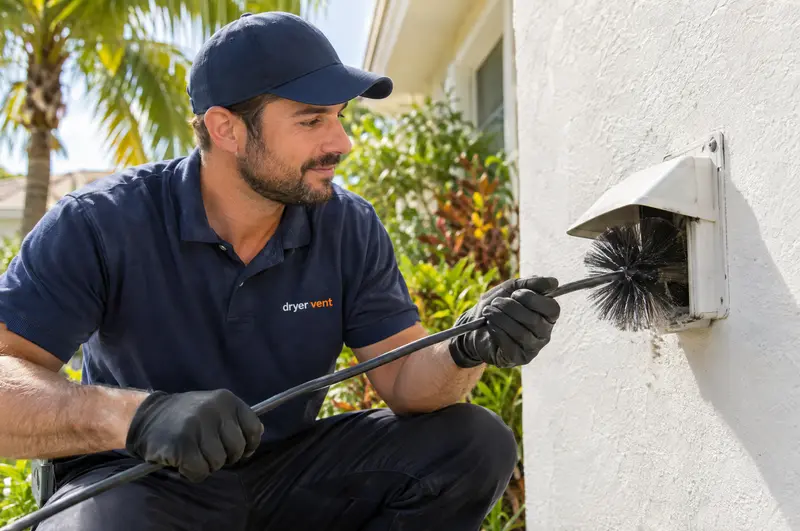
A soffit dryer vent ends under the roof overhang, and it is one of the most common terminations on Florida homes and one of the most troublesome. Exhaust leaves the soffit, rises along the underside of the eave and is pulled back into the attic through the perforated soffit vents right beside it, carrying lint and moisture with it. A soffit termination can work if it uses a proper dryer fitting with a damper and no screen and keeps its distance from openings, but in many homes rerouting to a wall or the roof is the better long term fix.
Why so many Florida homes vent through the soffit
The reason is usually the roof. Many Florida houses have concrete or clay tile roofs, and cutting a new penetration through tile means removing tiles, flashing a cap properly and resetting the tile without cracking it. Installers and builders often avoid that work by running the duct across the attic and out the nearest soffit instead.
Single story concrete block homes with an interior laundry or a laundry room deep inside the garage push in the same direction. Coring through block is slower than cutting through a soffit panel, so the duct heads up into the attic and out the eave.
Why soffit vents clog and send lint back into the attic
Soffit terminations fail in a few predictable ways.
Exhaust gets pulled back in. Florida attics are ventilated through perforated or slotted soffit panels that draw outside air in along the eaves. A dryer outlet set into the same soffit releases warm, wet, linty air right where the attic is breathing in. Some of it goes straight back up. Over time you find a gray film of lint on the insulation along that wall, and in humid months that damp lint can encourage mold.
The wrong fitting. We often find the duct ending at an ordinary louvered or screened soffit vent, or at a plain hole in the soffit panel. Screens and fine louvers catch lint and close off within months. Some have no damper, so birds and insects move in.
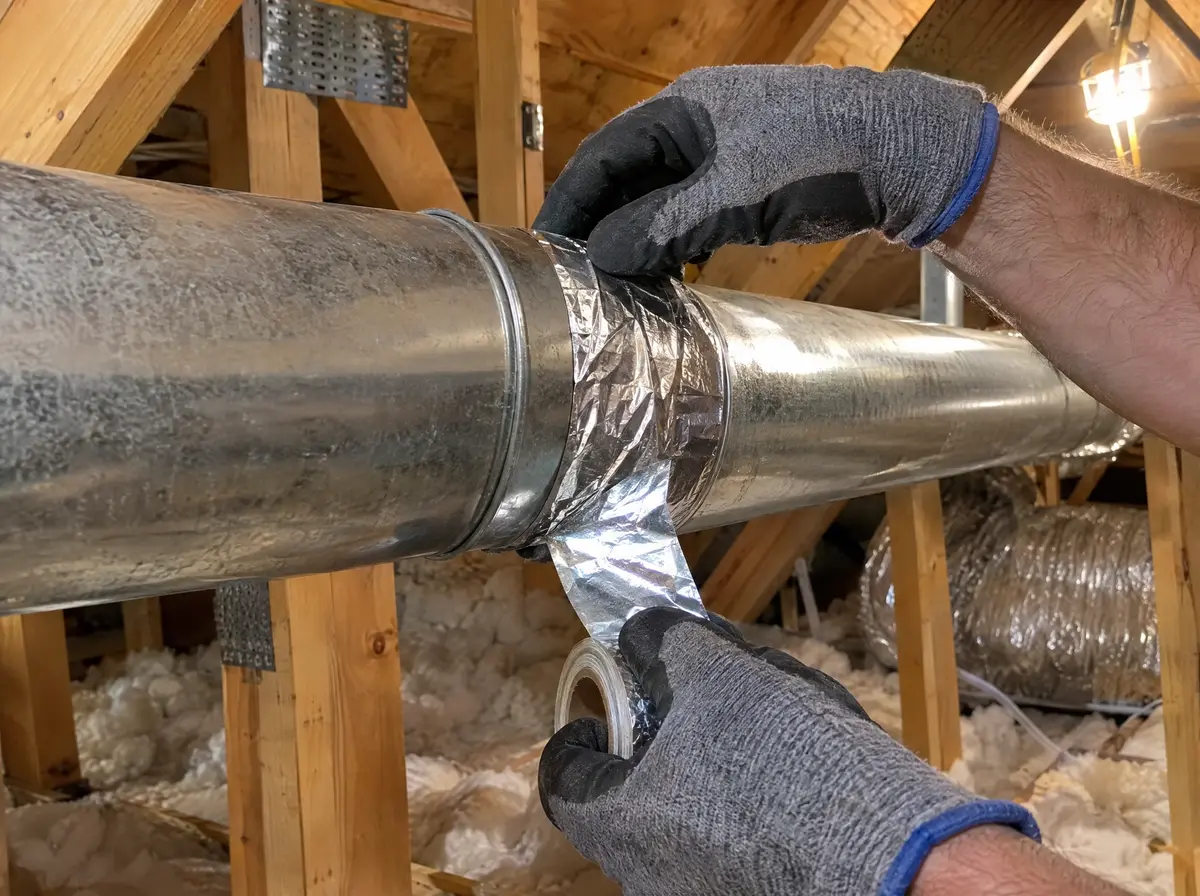
Long, sagging attic runs. The duct crosses the attic, often in foil hose, often with sags between trusses. Lint settles in the low spots. In a hot Florida attic the duct sweats, and the lint turns to paste.
Disconnected ducts. A duct that was never fastened to the soffit fitting, or that pulled loose, dumps all of the exhaust into the attic. This is one of the more serious findings, and it often shows up only when someone goes into the attic for another reason.
Storm damage. Hurricane season winds can loosen soffit panels and fittings, and wind driven rain can enter a termination that has no working damper. After a storm it is worth checking from the ground that the soffit fitting is still in place.
What the code says about terminations
The Florida Building Code, section M1502, sets these general rules for where a dryer exhaust ends. The dryer manufacturer’s installation instructions come first, and the code fills in where they are silent.
| Requirement | General rule | What it means for a soffit |
|---|---|---|
| Location | At least 3 feet in any direction from openings into the building, unless the manufacturer says otherwise | Perforated soffit panels, windows and doors near the outlet are a concern |
| Damper | Backdraft damper required | A plain louver or open hole does not qualify |
| Screen | No screen at the termination | Screened soffit vents are not acceptable for dryer exhaust |
| Duct | 4 inch rigid metal, smooth interior, joints without screws | Foil hose across the attic should be replaced |
| Length | 35 feet, less 5 feet per 90 degree bend and 2.5 feet per 45 degree bend, unless the manual allows more | Long attic runs to a far soffit can exceed it |
Whether a particular soffit outlet complies depends on the fitting, the manual and what surrounds it. Our article on the Florida dryer vent code covers the full set of rules.
Signs your soffit vent is in trouble
- Lint on the soffit panels or on the ground below the eave
- Lint on the attic insulation near the outside wall
- A damp or musty smell in the laundry room or the attic
- Drying times that keep getting longer
- The top of the dryer hot to the touch at the end of a cycle
- Birds flying in and out under the eave
Options to fix a soffit dryer vent
| Option | When it fits | Approximate cost with us |
|---|---|---|
| Clean the run and the soffit fitting | Fitting is correct, duct is rigid, problem is lint | $100 to $200 |
| Replace the fitting with a proper dryer termination | Screened or louvered fitting, no damper | Within cleaning or repair range depending on access |
| Replace attic foil with rigid metal duct | Foil hose, sags, crushed sections | $200 to $600 |
| Reroute to an exterior wall | Laundry near an outside wall | $200 to $600 |
| Reroute through the roof | No practical wall route | $200 to $600, unusual tile work quoted before booking |
| Reconnect a loose duct and clean the attic area | Duct disconnected in the attic | Repair range, quoted after we see it |
Where the soffit has to stay, the panels right around the outlet matter as much as the fitting. Solid soffit panels around the termination keep exhaust from being pulled straight back into the attic. We look at that when we replace a fitting.
When the laundry room sits on an outside wall, a wall hood is usually the cleanest solution. The run gets shorter, lint does not climb, and you can check the flap from the yard. Our article on roof vs wall dryer vents compares the two.
How we handle a soffit vent
We measure airflow at the termination first. Then we go into the attic, follow the duct from the laundry room to the soffit and check every joint and support. We brush the full run, clear the fitting and confirm the damper moves freely, then measure airflow again.
If the fitting is wrong, we replace it through our roof and wall vent caps service. If the duct is foil or disconnected, that is a dryer vent repair. If you are not sure what you have, a dryer vent inspection will tell you, and you can book through our contact page.