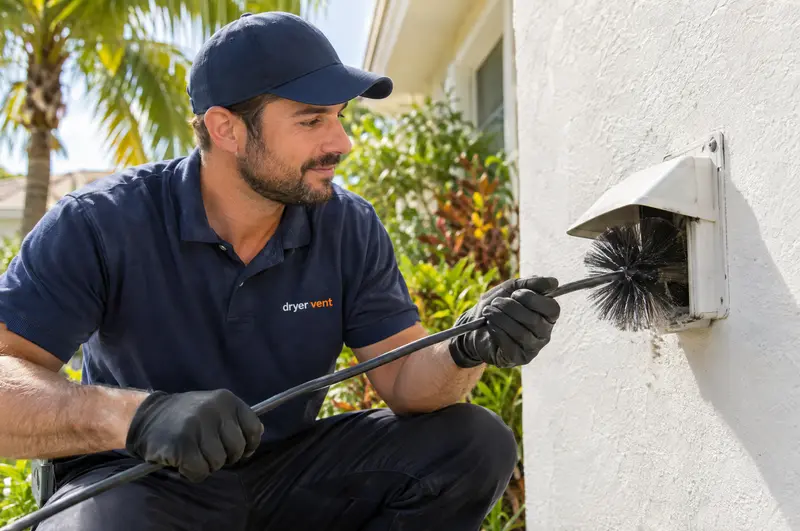
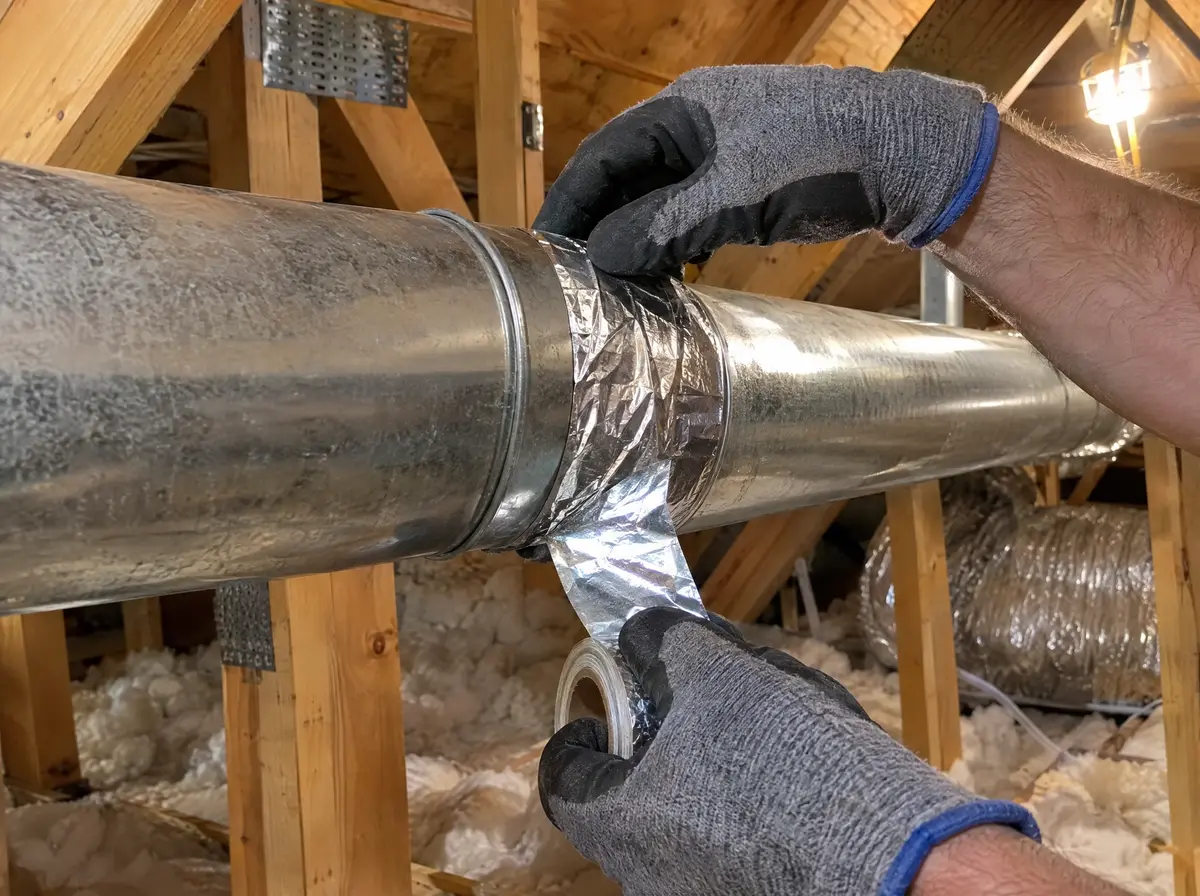
A wall dryer vent is the better choice whenever the laundry is close enough to an exterior wall. The run is shorter, there are fewer bends, lint does not have to climb, and you can check the hood from the ground. A roof vent is the right answer when there is no practical wall route, such as an interior laundry room or an upstairs dryer, but it has to end in a proper dryer cap with a backdraft damper and no screen, and it needs cleaning more often.
The two terminations side by side
| Factor | Wall vent | Roof vent |
|---|---|---|
| Typical run length | Short, often a few feet | Longer, through the attic |
| Direction of airflow | Horizontal | Up, then out |
| Lint behavior when the dryer stops | Stays near the exit or falls out | Can settle back down the duct |
| Checking the damper | From the ground | Ladder and roof access |
| Bird and pest exposure | Moderate | Higher, caps are sheltered and out of sight |
| Storm exposure | Lower | Caps can be loosened or damaged by wind |
| Usual cleaning interval | Around 12 months for a typical family | Around 6 to 12 months |
| Cleaning cost with us | $100 to $200 | $100 to $200, toward the upper end |
Why wall vents usually win
Dryer exhaust is warm, wet and full of lint. The faster it reaches open air, the less lint drops inside the duct. A laundry room on an exterior wall of a garage or utility area often needs only a short straight run, sometimes with a single elbow behind the dryer. That is about as good as a vent gets.
A wall hood is also easy to watch. You can walk outside while the dryer runs and see whether the flap opens. You can spot lint caught in the louvers or grass poking out of the opening. Problems get caught early.
There are wall vent problems too, and most of them are local. In Florida yards, shrubs, mulch and landscape rock pile up against hoods near the ground. Air conditioning condensers sometimes sit right beside the dryer outlet. The hood needs clear space so the damper can open fully and the exhaust can disperse.
When a roof vent is the only practical option
Many Florida homes have the laundry in an interior closet, a hallway alcove or on the second floor. Running a duct to the nearest wall from there may mean crossing the house through the attic, with more length and more bends than going straight up. In those homes, the roof is often the shortest legal route.
Roof vents work, but they ask more of the installation and the owner. The duct climbs through the attic, so every joint and every support has to be right. The cap sits out of sight, so a stuck damper can go unnoticed for a long time. And when the dryer stops, lint that did not clear the cap can slide back down and gather at the first elbow.
The cap matters more than anything
A roof vent is only as good as its cap. Several products on Florida roofs were never meant for dryer exhaust:
| Cap type | Suitable for a dryer? | Why |
|---|---|---|
| Dryer roof cap with backdraft damper | Yes | Opens under dryer airflow, closes when it stops |
| Mushroom or gooseneck cap with mesh | No | Mesh catches lint and closes off |
| Louvered or turtle attic vent | No | Built for attic ventilation, usually screened |
| Open pipe with no cap | No | No damper, lets in rain, pests and birds |
The Florida Building Code requires a backdraft damper at the termination and prohibits a screen. It also requires the termination to be at least 3 feet from any opening into the building. Our article on the Florida dryer vent code puts those rules in a table.
Birds, storms and salt air
Roof caps are sheltered, warm and high off the ground, which suits sparrows and other small birds. A damper stuck open with lint is an open door. We clear nests from Florida roof caps throughout the year, and a cap packed solid is quoted before booking because it can take much longer. Our article on bird nests in dryer vents covers signs and guards that stay within the code.
Wind is the other roof concern. After a strong storm, it is worth checking from the ground that the cap is still seated and that nothing is hanging off it. Along the coast, salt air also stiffens damper hinges over time, so a damper that swung freely a few years ago may now stick halfway.
Moving a roof vent to a wall
If your laundry sits near an exterior wall and the vent goes through the roof anyway, it may be worth rerouting. This is common in homes where the laundry was moved during a remodel, or where the original installer took the easy path upward.
Rerouting is a dryer vent installation, priced at $200 to $600 depending on the route and how much duct is replaced. We install rigid metal duct on the shortest safe path to the wall, fit a hood with a working damper, and seal the old roof opening. We measure airflow before and after, so you can see the change.
Keeping either type working
Whichever termination you have, the same habits help. Clean the lint screen every load. Check the exit with the dryer running, from the yard for a wall hood or from a safe spot on the ground for a roof cap. Keep landscaping clear of wall hoods. Have the full run cleaned on a schedule that suits your household and termination.
If a cap or hood is damaged, missing its damper or fitted with a screen, that is a roof and wall vent cap job, priced inside our cleaning or repair range depending on what needs doing.