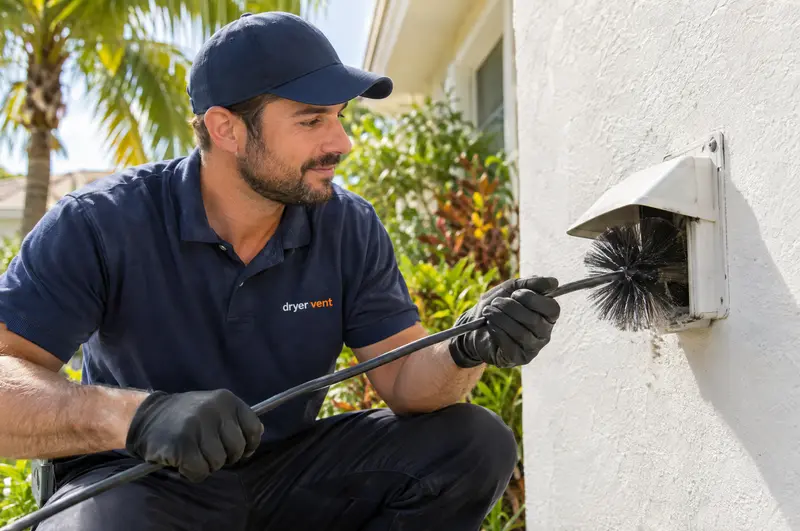
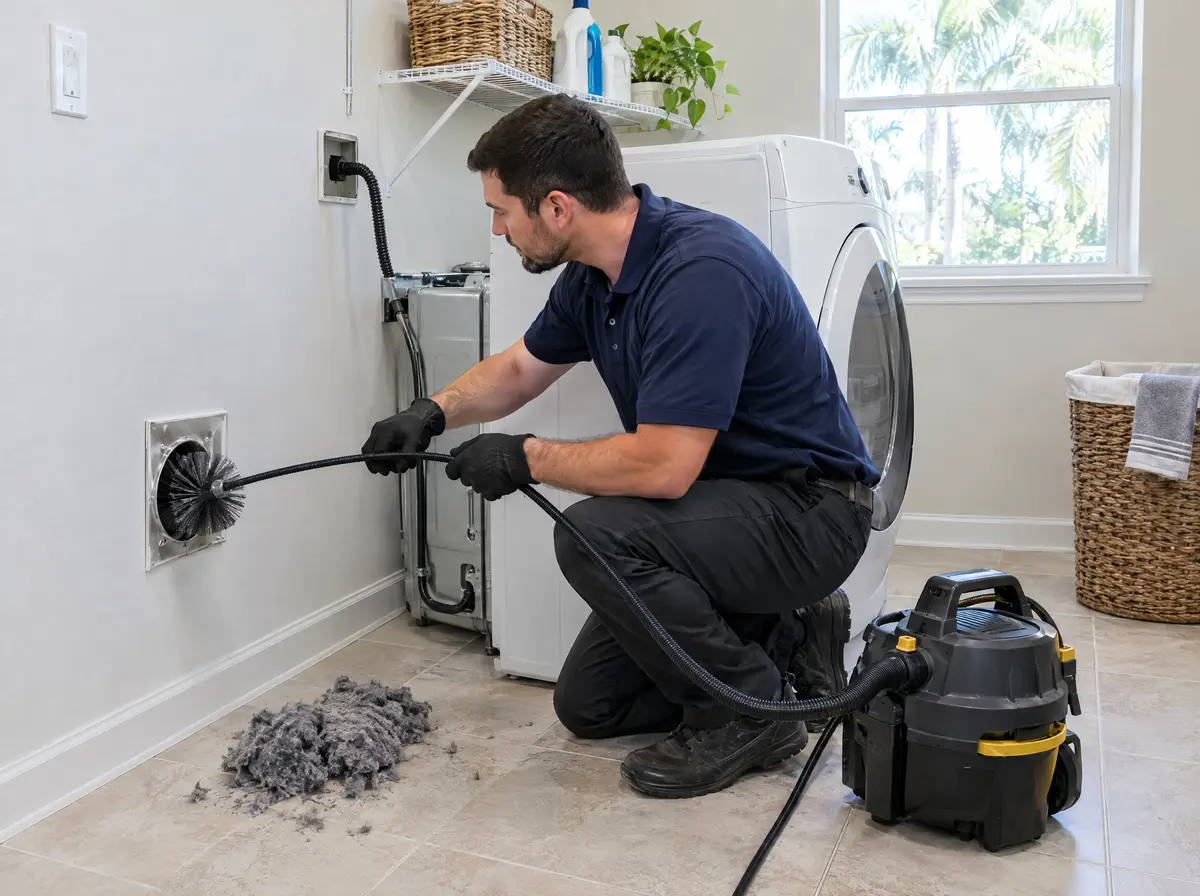
A bird nest in a dryer vent usually announces itself with chirping near the laundry room, twigs or grass sticking out of the outside hood, a flap that stays open when the dryer is off, and loads that take longer to dry. The fix is to clear the nest and the duct behind it, then make sure the termination has a damper that closes properly. A screen is not the answer, because the Florida Building Code prohibits screens on dryer vent terminations.
Signs a bird has moved in
Most people find out from sound before anything else. Here is what to look and listen for:
| Sign | What it tells you |
|---|---|
| Chirping or scratching in the wall or ceiling near the laundry | Birds or chicks inside the hood or duct |
| Birds flying in and out of the hood or roof cap | Active nest, possibly with eggs |
| Twigs, grass, feathers or droppings at the opening | Nest material packed into the termination |
| Flap stays open when the dryer is off | Damper jammed by nest material or lint |
| Loads take longer to dry | Exhaust partly blocked |
| Musty or sour smell in the laundry room | Damp nest material and droppings in the duct |
If you notice two or more of these, stop using the dryer until the vent is cleared. Running it against a nest pushes hot air into a blocked duct and adds lint to dry nesting material, which is a poor combination.
Why Florida birds love dryer vent caps
From a small bird’s point of view, a dryer vent is close to ideal. It is a sheltered opening the right size, it is often warm, and it sits high enough off the ground to feel safe. Roof caps are even better, because they are out of reach and out of sight.
Florida adds a long nesting season. With mild weather most of the year, we find nests in vents in every season, not just spring. House sparrows and European starlings are the usual tenants, and Carolina wrens turn up too.
The biggest invitation is a damper that does not close. A flap held open by a little lint, a broken hinge or a bent louver is an open door. Coastal salt air stiffens hinges over time, so a damper that worked when the house was built may now hang halfway.
Clearing a nest safely
Pulling a nest out by hand from the hood often leaves most of it behind, packed further into the duct. A proper removal clears the hood or cap, then the full run, because nest material and lint usually travel several feet inward.
On a standard visit we measure airflow outside first, remove the nest material from the termination, run a rotary brush and compressed air through the full duct from both ends where we can, clean and free the damper, and measure airflow again. If the cap is cracked or the damper is broken, we tell you and replace it.
If there are eggs or chicks, we talk it through with you before removal. Most native birds and their active nests are protected under federal law, while house sparrows and European starlings are not. Identifying the bird first keeps the job straightforward.
What it costs
| Situation | Price |
|---|---|
| Nest in a wall hood, removed during a cleaning | $100 to $200 |
| Roof cap packed solid with nest material | Quoted before booking |
| Damaged hood or cap replaced, or new damper fitted | $200 to $600 |
The packed roof cap is quoted separately because it can take much longer than a normal visit and sometimes needs a new cap. Our article on dryer vent cleaning cost in Florida explains what else moves the price.
Guards that do not break the no screen rule
The code requires a backdraft damper at the termination and prohibits a screen. That rules out the common fix of stretching mesh or hardware cloth over the hood, and it also rules out many store bought guards that are, in practice, a fine wire cage. They catch lint every time the dryer runs and close off the outlet within weeks.
What does work is a termination that closes firmly on its own:
- A hood with a single damper that seals flat when the dryer stops. A flap that sits tight against its frame leaves no gap to enter.
- A dryer roof cap with a built in damper. Made for dryer exhaust, it opens under airflow and closes when the dryer stops.
- A replacement damper on an otherwise sound hood, when the old flap has warped, cracked or lost its hinge.
- Regular cleaning, because lint on the hinge is what usually props a damper open in the first place.
These keep birds out because there is nothing to get through when the dryer is off. Our roof and wall vent caps service covers fitting and replacing them.
Roof caps versus wall hoods for nesting
Roof caps attract more nests than wall hoods because they are sheltered and out of sight, and owners rarely look at them. A wall hood at least gets a glance when you walk past it. If your vent goes through the roof, check from the ground every few months for nesting material or a cap that looks open. Our article on roof versus wall dryer vents explains the tradeoffs between the two.
After the nest is gone
Once the vent is clear and the damper closes, the habits that keep birds out are simple. Clean the lint screen every load so less lint reaches the damper. Walk past the hood now and then, or look up at the roof cap from the yard, and watch for twigs or a flap that sits open. If you hear chirping again, book a visit before the nest has time to grow.
If you have a nest now, contact us to book. We work Monday to Friday 8am to 7pm, Saturday 9am to 5pm and Sunday 10am to 4pm, Eastern time, with same-week appointments.