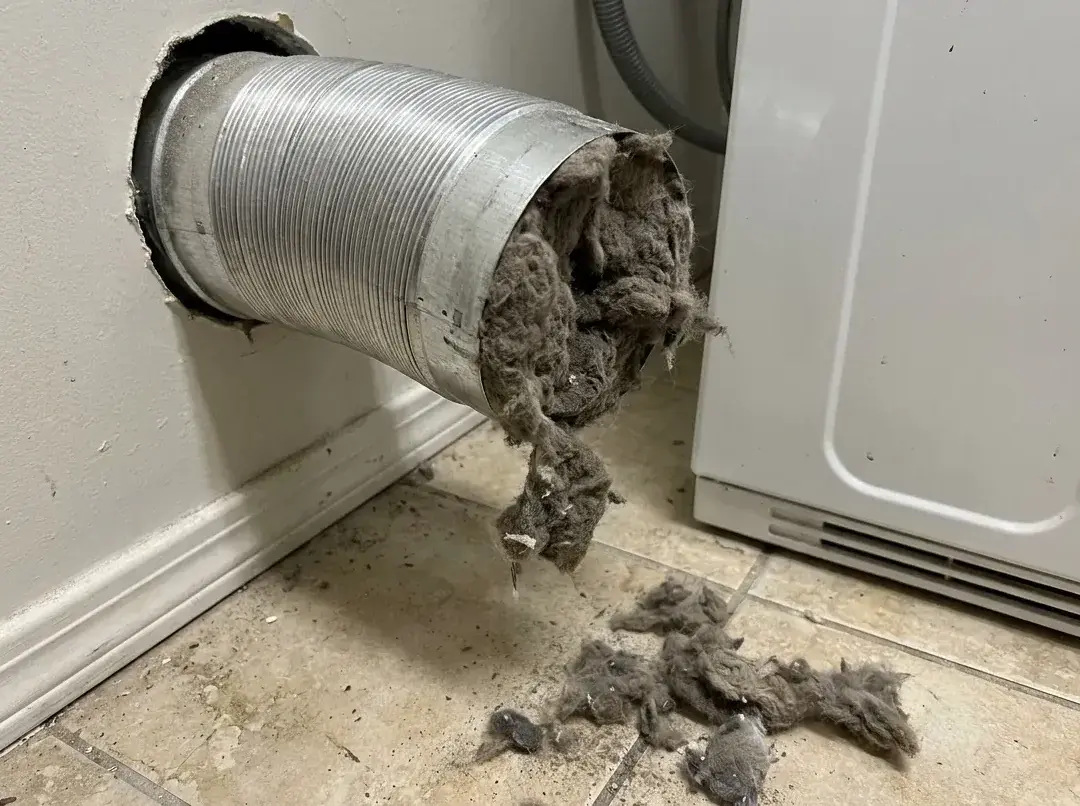
The US Fire Administration reports about 2,900 home clothes dryer fires a year in the US, causing roughly 5 deaths, 100 injuries and $35 million in property loss. The leading cause is failure to clean, which accounts for about a third of those fires. In plain terms, lint that is allowed to build up in the dryer and its vent is the biggest single reason dryers catch fire, and it is also the most preventable.
The numbers, in one place
These are the only figures we use on this site, and they come from the US Fire Administration.
| Measure | US Fire Administration figure |
|---|---|
| Home clothes dryer fires per year | About 2,900 |
| Deaths per year | Roughly 5 |
| Injuries per year | Roughly 100 |
| Property loss per year | About $35 million |
| Leading cause | Failure to clean |
| Share caused by failure to clean | About one third |
The death count is low compared with many other fire causes, and that is worth keeping in perspective. The property loss and the share tied to cleaning are the figures that matter for a homeowner. A third of these fires come from a problem that a routine cleaning removes.
How a dryer fire starts
A dryer is a heat source with a fan. It heats air, passes it through tumbling fabric, and pushes it out through the vent. Lint is the fiber that breaks off the fabric along the way. It is light, dry and fine, which makes it easy to ignite.
The lint screen catches most of it. Some always gets past, and that portion collects inside the dryer cabinet, in the transition hose and along the duct. As the layer grows, airflow drops. With less air moving, the dryer runs hotter and longer to finish a load. Its safety limit cycles the heat on and off, and lint now sits close to that heat with little air moving across it.
That combination of fuel, heat and stagnant air is how most dryer fires begin. A fire that starts inside the cabinet can then travel into the duct, where more lint is waiting.
Where lint collects
Knowing where lint settles explains why a quick clean of the screen is not enough.
| Location | Why lint builds up there |
|---|---|
| Lint screen housing | Fibers that slip around the screen edge pack into the slot |
| Inside the dryer cabinet | Air leaks inside the machine carry lint past the screen |
| Transition hose | Ridged foil hose catches lint in every fold |
| Elbows and low points | Air slows at bends and drops lint |
| Joints fastened with screws | Screw tips inside the duct snag lint and start plugs |
| Roof cap or wall hood | Lint meets the damper, and nests add more fuel |
Conditions that raise the risk
Some installations make a fire more likely regardless of how often you clean.
Foil or vinyl hose hidden in a wall or ceiling is the most serious. It crushes easily, it traps lint in its ridges, and if a fire starts in it, it is behind drywall where nobody can see it. The Florida Building Code requires rigid metal duct with a smooth interior for the run itself. Our article comparing foil and rigid dryer duct explains the difference.
Runs that are too long are the second. The code sets a maximum developed length of 35 feet, reduced for each bend, unless the dryer maker allows more. A run past that limit moves air slowly and builds lint quickly.
The third is a termination that does not let air out freely. A screen over the outlet, a damper stuck with lint, or a bird nest in the cap all slow the air at the very end of the run.
Habits that lower the risk
Most of what reduces dryer fire risk is ordinary maintenance:
- Clean the lint screen before or after every load.
- Wash the screen with warm soapy water every few months if you use dryer sheets.
- Keep the area around the dryer clear of boxes, laundry and cleaning products.
- Do not run the dryer when nobody is home or when everyone is asleep.
- Do not dry items stained with oil, gasoline, cooking oil or solvents.
- Check from outside that the flap opens when the dryer runs.
- Have the full vent run cleaned on a schedule that suits your household.
Our guide on how often to clean a dryer vent sets out intervals by household size, run length and pets.
Warning signs to act on
A fire rarely comes without notice. Long drying times, a dryer that feels very hot, a humid laundry room and an outside flap that barely moves all point to a restricted vent. A burning smell is the urgent one. Our list of signs of a clogged dryer vent goes through each.
If you smell burning, stop the dryer, unplug it if you can reach the plug safely, and leave it off until it has been checked. If you see smoke or flame, get everyone out of the house and call 911 from outside. Keep the laundry room door closed if you can do so on the way out.
What a cleaning changes
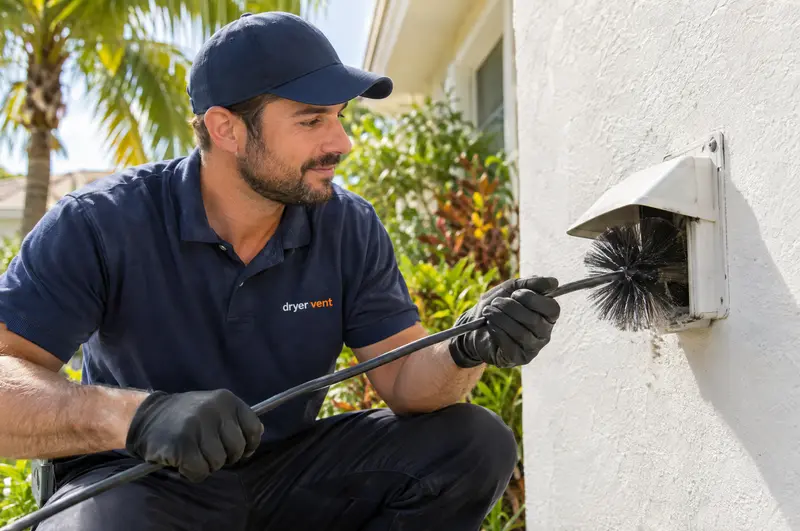
A dryer vent cleaning removes the fuel that a third of these fires depend on. With Dryer Vent Florida it costs $100 to $200. We measure airflow at the outside termination first, pull and check the transition hose, run a rotary brush and compressed air through the full run from both ends where possible, clear the hood or cap and free the damper, then measure airflow again.
If we find foil hose in a wall, a crushed section or a run that is too long, we tell you. Fixing those conditions is a repair or replacement at $200 to $600, and it addresses the part of the fire risk that cleaning alone cannot.